Sudden or severe swelling in one leg can signal deep vein thrombosis (DVT) — a blood clot in a deep vein of the calf or thigh — and needs emergency evaluation. Warning signs are swelling, redness or warmth, heaviness or tightness, shiny discoloured or bluish skin, and persistent pain or cramp that worsens over time. Unlike a muscle strain, DVT pain does not improve with rest. Call 911 for sudden shortness of breath, chest pain or rapid heartbeat — the clot may have travelled to the lungs.
Have you noticed sudden swelling in your leg? Are you wondering if it’s something serious?
Severe leg swelling can be more than just discomfort. It may signal a dangerous condition called deep vein thrombosis (DVT).
DVT occurs when a blood clot forms deep in a vein, often in the leg, and requires prompt medical attention. Understanding the causes, symptoms, and risk factors can help you know when to seek emergency care for DVT before complications arise.
Why is my leg swollen?
Leg swelling can have many causes, including:
- Injury.
- Infection.
- Fluid retention.
Sudden or severe swelling that occurs in one leg may indicate a medical emergency.
DVT warning signs include:
- Swelling.
- Redness or warmth.
- Heaviness or tightness.
- Shiny, discolored, or bluish skin.
- Persistent pain or cramp that worsens over time.
What Is Deep Vein Thrombosis (DVT)?
According to the Mayo Clinic, DVT is a serious medical condition where a blood clot forms in a deep vein (usually in the calf or thigh).
These clots can break off and travel to the lungs, causing a pulmonary embolism (PE), a life-threatening emergency that requires immediate medical intervention.
DVT can develop silently. Watch for:
- Persistent leg pain or tenderness (often deep in the calf or thigh).
- Swelling that is sudden or more severe than usual.
- Warmth and redness in the affected area.
DVT Leg Pain vs. Muscle Strain
DVT leg pain is often mistaken for muscle strain or varicose veins, which is why recognizing the key differences is so important:
- DVT leg pain is persistent, may worsen over time, and is often accompanied by swelling, warmth, and redness.
- Muscle strain usually involves localized soreness, tenderness, weakness, or bruising. Pain from a strain generally improves with rest and rarely leads to significant swelling, redness, or warmth.
Knowing these differences can help you determine when leg pain may signal a more serious health issue that requires immediate medical attention.
What Does DVT Leg Swelling Feel Like?
DVT-related leg swelling feels like a persistent and unrelenting ache or heaviness. These symptoms of deep vein thrombosis are often accompanied by throbbing pain, tenderness, warmth, and redness on the skin.
Unlike ordinary swelling, DVT-related swelling usually does not improve with rest and may worsen over time.
Should I go to the ER if I think I have a blood clot in my leg?
If you notice one or more signs of DVT in the leg, consult your physician or go to the nearest emergency room for DVT treatment options:
- Sudden or unexplained swelling in one leg.
- Persistent pain or tenderness, often in the calf or thigh.
- Warmth or redness over the affected area.
- Shiny, discolored, or bluish skin.
- Pain that worsens with movement or standing.
If you experience any of these symptoms, go to your nearest emergency room right away.
Certain factors may increase your risk of developing deep vein thrombosis:
- Obesity.
- Smoking.
- Recent surgery or injury.
- Prolonged immobility (e.g., long flights, drives, bed rest, etc.).
- Pregnancy.
- Hormone replacement therapy.
- Personal or family history of blood clots.
Call 911 or go to your nearest emergency room if you experience:
- Sudden shortness of breath.
- Chest pain.
- Rapid heartbeat.
- Sudden and severe leg swelling or pain.
Red flags that need immediate attention include leg or arm swelling on one side of the body, severe pain, warmth, or redness.
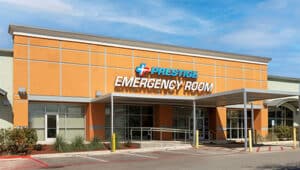
Our board-certified physicians and medical professionals specialize in the diagnosis and treatment of DVT. We can quickly assess for DVT, perform diagnostic imaging, and start treatment to prevent life-threatening complications.
When you arrive at Prestige ER with suspected DVT, your physician will assess your medical history, risk factors, and current symptoms, in addition to one or more of the following, to confirm your diagnosis.
- Physical exam of the affected leg.
- Diagnostic testing (e.g., ultrasound and blood tests).
- Potential complications (e.g., pulmonary embolism).
DVT: urgent care or ER?
Primary care providers can evaluate mild leg swelling. However, suspected DVT requires rapid assessment to prevent life-threatening complications, like PE.
Prestige ER can provide immediate imaging, lab tests, and treatment, which are critical for preventing clots from traveling to the lungs.
If you notice sudden or severe swelling, don’t wait. Go to your nearest emergency room right away.
DVT Diagnosis and Treatment Options
- Diagnosis: Ultrasound imaging and blood tests to help confirm DVT.
- Treatments: Anticoagulants to prevent clot growth. Compression stockings to reduce swelling and improve circulation. If you have a large or complicated blood clot, more intensive interventions may be required.
- At-home support: Elevate your leg and avoid prolonged immobility to help reduce swelling until you get the urgent medical care you need.
Why Choose Prestige ER for Emergency DVT Care
Prestige ER provides fast, expert treatment for DVT. Our emergency room services include:
- Immediate access to IV treatment and labs.
- Advanced diagnostics and imaging services.
- Board-certified ER physicians on-site 24/7.
- Rapid intervention for life-threatening conditions.
Visit your nearest Prestige ER location for fast, compassionate care for a range of medical emergencies.
Frequently Asked Questions About Deep Vein Thrombosis
Yes. Suspected DVT needs rapid assessment because a clot can travel to the lungs and cause a pulmonary embolism. Primary care can evaluate mild swelling, but suspected DVT should not wait.
DVT pain is persistent, worsens over time and comes with swelling, warmth and redness. Strain pain is localised soreness that improves with rest and rarely causes significant swelling or redness.
Ultrasound imaging and blood tests, alongside a physical exam of the affected leg and a review of medical history and risk factors.
Obesity, smoking, recent surgery or injury, prolonged immobility such as long flights or bed rest, pregnancy, hormone replacement therapy, and a personal or family history of blood clots.