Chest pain can be frightening, and for good reason: it may be a warning sign of a heart attack or another life-threatening condition. It can also come from the lungs, digestive system, chest muscles, or anxiety. Because the symptoms often overlap, it is not safe to diagnose the cause on your own.
If your pain is new, unexplained, severe, or accompanied by other warning signs, prompt emergency evaluation matters. This chest pain emergency room guide explains what a heart attack may feel like, when to call 911, and what to expect when you arrive at the ER.
If you may be having a heart attack, call 911 now. Do not drive yourself or wait for the pain to pass.
When chest pain is a 911 emergency
Call 911 immediately if chest pain or discomfort is sudden, severe, lasts more than a few minutes, goes away and returns, or occurs with any of the following:
- Pressure, squeezing, fullness, heaviness, tightness, or pain in the center or left side of the chest
- Pain or discomfort that spreads to one or both arms, the shoulders, back, neck, jaw, or upper stomach
- Shortness of breath, with or without chest discomfort
- Cold sweat, nausea, vomiting, dizziness, or fainting
- A rapid or irregular heartbeat, sudden weakness, or unusual fatigue
- Sudden sharp chest pain with trouble breathing, especially after prolonged travel, surgery, bed rest, or with swelling in one leg
- Sudden severe or tearing pain that moves into the upper back
These symptoms can signal a heart attack, pulmonary embolism, aortic dissection, collapsed lung, or another medical emergency. Emergency medical services can begin treatment on the way and alert the receiving hospital before arrival.
What does a heart attack feel like?
A heart attack occurs when blood flow to part of the heart becomes blocked. Without enough oxygen, heart muscle begins to suffer damage. The American Heart Association says the most common warning sign is discomfort in the center of the chest that lasts more than a few minutes or goes away and returns.
People often describe heart attack discomfort as pressure, squeezing, fullness, burning, heaviness, or an ache rather than a sharp pain. It may start during activity or at rest and can spread beyond the chest. Shortness of breath, sweating, nausea, or lightheadedness may occur at the same time.
Heart attacks are not always dramatic
Some heart attacks begin suddenly and intensely, but others start slowly with mild or intermittent symptoms. A person may mistake the discomfort for heartburn, indigestion, stress, or a pulled muscle. Pain that improves briefly does not rule out a heart attack.
Symptoms can differ in women and other adults
Chest pain or discomfort remains the most common heart attack symptom in both men and women. However, women may be more likely to experience nausea, vomiting, unusual fatigue, shortness of breath, or pain in the back, shoulder, neck, jaw, or upper stomach. Older adults and people with diabetes may also have less typical symptoms. The CDC recommends calling 911 immediately when heart attack symptoms appear.
Is it a heart attack or another cause of chest pain?
No symptom pattern can reliably rule a heart attack in or out at home. Even discomfort that seems mild, changes with position, or resembles a previous episode of heartburn may need evaluation when it is new or unexplained.
Features that can be more concerning for the heart
- Pressure, squeezing, tightness, or heaviness rather than pain in one small spot
- Discomfort triggered by physical effort or emotional stress
- Pain that spreads to the arm, shoulder, back, neck, jaw, or upper abdomen
- Symptoms accompanied by breathlessness, sweating, nausea, or lightheadedness
- New chest discomfort in someone with heart disease or significant cardiovascular risk factors
These are warning patterns, not a home diagnosis. Heart attacks can present differently, and serious non-cardiac problems can cause similar symptoms.
Other possible causes of chest pain
Chest pain may come from several conditions, including:
- GERD or heartburn: burning discomfort that may follow a meal or worsen when lying down
- Muscle strain or costochondritis: pain related to movement, lifting, coughing, or tenderness of the chest wall
- Anxiety or a panic attack: chest tightness, rapid breathing, racing heartbeat, dizziness, or tingling
- Pneumonia or pleurisy: sharp pain that may worsen with a deep breath or cough, sometimes with fever
- Pulmonary embolism: a blood clot in the lung that can cause sudden chest pain, shortness of breath, rapid heartbeat, or coughing up blood
- Pneumothorax: a collapsed lung that can cause sudden one-sided pain and difficulty breathing
- Aortic dissection: a tear in the wall of the aorta that may cause sudden, severe chest or upper-back pain
Some of these conditions are also life-threatening. That is why new or unexplained chest pain deserves medical attention even when you do not think it is your heart.
When should you go to the ER for chest pain?
Go to the emergency room for chest pain that is new, unexplained, persistent, recurring, or worsening. Emergency evaluation is especially important when the discomfort:
- Occurs at rest or wakes you from sleep
- Lasts more than a few minutes or repeatedly returns
- Feels different from your usual heartburn, anxiety, or stable angina
- Follows a chest injury or occurs with breathing difficulty
- Appears with fever, coughing up blood, fainting, confusion, or severe weakness
- Occurs in someone with a history of heart disease, blood clots, high blood pressure, high cholesterol, diabetes, smoking, or a strong family history of early heart disease
If symptoms suggest a heart attack or another immediately life-threatening condition, call 911 rather than driving to an ER. If you are stable but have new or unexplained chest pain, seek emergency evaluation without delay.
Urgent care vs. emergency room for chest pain
Chest pain requires emergency-level testing because urgent care clinics may not have continuous cardiac monitoring, cardiac blood tests, or advanced imaging. An ER can evaluate heart, lung, vascular, and other dangerous causes while beginning treatment if a serious problem is found.
What happens in the ER for chest pain?
The emergency team will first assess your vital signs, symptoms, medical history, and risk factors. Testing depends on your condition and may include:
- An electrocardiogram (EKG or ECG) to check the heart’s electrical activity
- Blood tests, including troponin, to look for heart-muscle injury; testing may be repeated to detect changes over time
- A chest X-ray or other imaging to evaluate the heart, lungs, and major blood vessels
- Continuous heart-rhythm, oxygen-level, and blood-pressure monitoring
- Additional testing based on the suspected cause of the pain
According to the National Heart, Lung, and Blood Institute, an EKG is a common initial test for suspected heart attack, while troponin blood tests help identify heart-muscle damage. A normal first test does not always end the evaluation, so your clinician may repeat testing or order imaging.
What to do while waiting for emergency help
- Stop activity, sit or lie down, and call 911.
- Do not drive yourself. Use an ambulance so treatment can begin before you reach the hospital.
- Unlock the door if possible and keep your phone nearby.
- Gather your medication list, allergies, and relevant medical history without delaying care.
- Follow the 911 dispatcher’s instructions. They may advise aspirin when appropriate, but it is not safe for everyone; if there is uncertainty, wait for EMS guidance.
Do not delay calling 911 to try antacids, rest, or other home remedies. Temporary improvement does not prove that the cause is harmless.
Get 24/7 chest pain emergency care at Prestige ER
Chest pain is not a symptom to ignore. Fast assessment can identify a heart attack and other dangerous conditions or provide reassurance and an appropriate care plan when the cause is less serious.
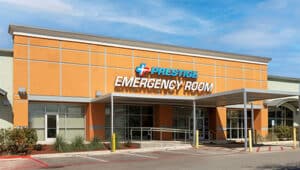
Prestige Emergency Room provides emergency chest pain evaluation with on-site testing, imaging, and experienced emergency physicians. Our four San Antonio-area facilities are open 24 hours a day, seven days a week.
Call 911 for heart attack warning signs or severe symptoms. If you are stable but need urgent evaluation for new or unexplained chest pain, find your nearest Prestige ER location for prompt emergency care.