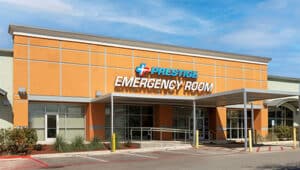
When a sudden illness or injury hits, knowing the difference between ER vs Urgent Care can save you time, money, and in serious cases, your life. Both provide fast care, but they are built for very different situations. This guide breaks down how to choose quickly and confidently, because the right choice depends almost entirely on how severe your symptoms are. If symptoms are severe or life-threatening, always call 911 or go straight to the emergency room.
Understanding ER vs Urgent Care
The core difference comes down to severity and capability.
Urgent care centers handle minor, non-life-threatening problems that still need same-day attention. Emergency rooms are equipped for serious, complex, and life-threatening conditions, with on-site imaging, labs, and physicians trained in emergency medicine.
Put simply, urgent care is for problems you could call your doctor about today, while the ER is for anything that could be serious or rapidly worsen. Urgent care also tends to cost less for minor issues, while the ER is staffed and stocked for true emergencies around the clock.
When Urgent Care Is the Right Choice
Urgent care is a good fit for conditions that are uncomfortable but not dangerous, such as:
- Minor cuts that may need a few stitches
- Mild sprains and strains
- Low-grade fevers, colds, and flu symptoms
- Sore throats and ear infections
- Minor burns or simple rashes
- Urinary tract infections and minor allergic reactions without trouble breathing
These visits are usually faster and less expensive than an ER trip when the problem is genuinely minor.
When You Need the Emergency Room
Some symptoms should never wait. Go to the ER or call 911 for:
- Chest pain or pressure
- Signs of stroke, such as facial drooping, arm weakness, or slurred speech
- Difficulty breathing
- Severe or uncontrolled bleeding
- Severe abdominal pain
- Head injuries, seizures, or loss of consciousness
- Broken bones with visible deformity
- Severe allergic reactions
- Sudden severe headache, confusion, poisoning, or a suspected overdose
Emergency rooms can run advanced tests and begin treatment immediately, which matters when every minute counts. You can see the full range of conditions covered by our emergency room services.
When in Doubt, Choose the ER
Here is the most important rule in the ER vs Urgent Care decision: if you are not sure how serious a symptom is, treat it as an emergency.
Conditions like chest pain or stroke symptoms can worsen in minutes, and urgent care centers are not equipped to handle them. Choosing the ER first avoids a dangerous delay from being sent on to a hospital anyway. A freestanding emergency room can often see you faster than a crowded hospital ER while delivering the same level of care.
This matters because emergencies are common. According to the CDC, about 151 million emergency department visits occur in the United States each year. Knowing where to go before a crisis hits helps you act fast and stay calm.
Get Care Fast When It Counts
Understanding ER vs Urgent Care means you will not lose precious time second-guessing during an emergency. For anything serious, an emergency room gives you the fastest path to advanced care.
At Prestige ER, board-certified physicians provide 24/7 emergency care with on-site labs and imaging across four San Antonio locations. If you are facing a possible emergency, do not wait. Contact Prestige ER or walk into your nearest location for immediate, compassionate care.